

Electricity bills jump several-fold as customers question meter readings, calculations
Staff Correspondent
For years, the monthly electricity bill at a retired employee’s home in Gafargaon, Mymensingh, stayed between Tk 1,700 and Tk 2,000.
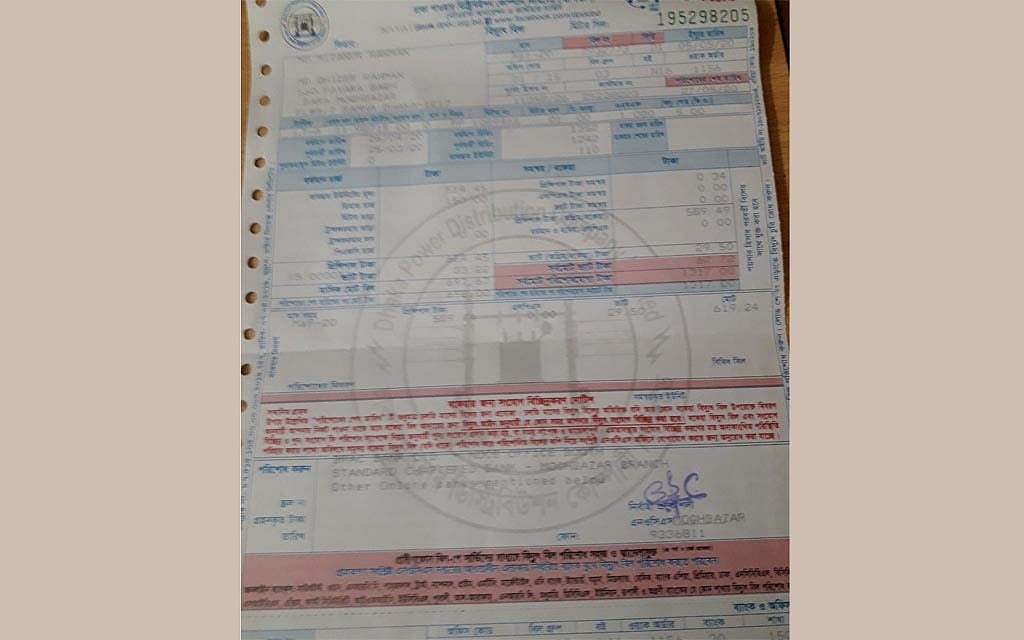
In May, it was about Tk 1,600. Then came June: nearly Tk 7,000.
His family had to pool money to pay the bill. But the customer’s son says that has not solved anything. By July, the meter had already recorded more than 500 units.
“Everyone in the family can help pay the bill, but that is not a solution,” he said. “What happens if another bill like this arrives?”
His family is not alone.
From Dhaka and Sunamganj to Narayanganj, Lakshmipur and Rajshahi, customers have complained of electricity bills rising two or three times within a month. Some say their recorded use has jumped despite no new appliances being installed. Others suspect bills are being prepared from estimated readings rather than regular meter checks.
In Segunbagicha, Dhaka, one resident said electricity officials found no fault with his meter, yet the units continued to rise faster than usual.
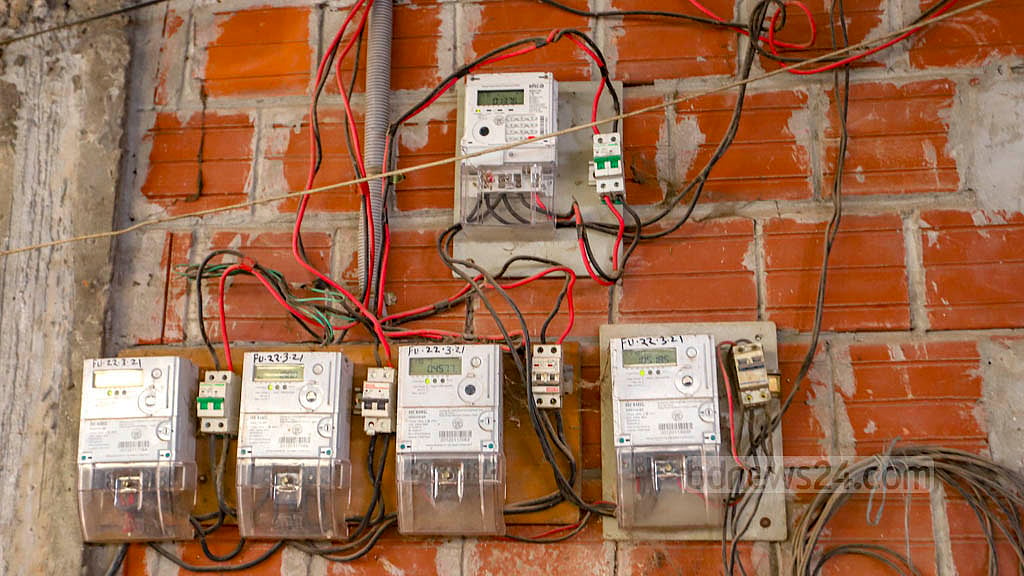
In Dharmapasha, Sunamganj, another customer’s use was recorded at around 90 units in both April and May. It rose to 105 units in June and then to 170 in July.
The complaints have brought customers on to the streets in Narayanganj, sent crowds to an electricity office in Raipur and prompted a memorandum to the head of the northern power distributor NESCO in Rajshahi.
But the authorities insist there is no evidence of widespread overbilling.
Bangladesh Power Development Board (PDB) Chairman Md Rezaul Karim said there could be “one or two” isolated errors, but investigations had not supported claims of bills being inflated on a large scale.
“Most of the complaints examined did not show the kind of excessive billing being alleged,” he said.
No central committee has been formed to investigate the complaints. Instead, each electricity distribution company has been asked to examine cases in its own area.
A Tk 1,600 Bill Becomes Nearly Tk 7,000
The son of the Gafargaon customer, who works in Dhaka while his family lives in the village, asked not to be named.
He said no new electrical equipment had been added to the house. After receiving the bill, he recorded the meter reading on video and showed it to the local electricity office.
Officials told him that the reading matched the bill.
He then switched off every electrical connection in the house to test the meter. The units did not increase while all appliances were off. Over the following 24 hours, the household used eight units.
“Even if we calculate 10 units a day, it should not be more than 300 units in 30 days,” he said. “But the bill showed nearly 600 units.”
The local office advised him to pay the bill and then apply for a replacement meter.
Meters Checked, Mystery Remains
The Segunbagicha resident lives in a multi-storey building with several submeters connected to a main meter.
He said the building’s total consumption appeared correct, but some submeters showed higher use while others showed less.
It has not yet been established whether the problem lies with the building’s internal wiring or the distribution system.
With the payment deadline approaching, he paid the bill after officials said any amount found to have been charged incorrectly could be adjusted later.
In Dharmapasha, the customer whose recorded use rose from 105 to 170 units alleged that meter readers did not visit homes regularly and that bills were often prepared on estimates.
He also complained that customers seeking help over electricity connections or bills did not receive proper service from the local office.
Protests, Pleas and Queues
In Rajshahi, the Rajshahi Rokkha Sangram Parishad submitted a seven-point memorandum to the NESCO’s managing director, demanding the withdrawal of excessive bills, correction of errors, and an end to customer harassment.
NESCO supplies electricity across 16 districts in the Rajshahi and Rangpur divisions.
Its Executive Director for Operations Md Mokhlesur Rahman said the company had received no information suggesting abnormal bills were widespread.
“There may be one or two isolated cases, and we are looking into them,” he said.
He acknowledged that meter-reading errors were possible and said specific complaints could be investigated if customers provided their names, meter numbers and billing information.
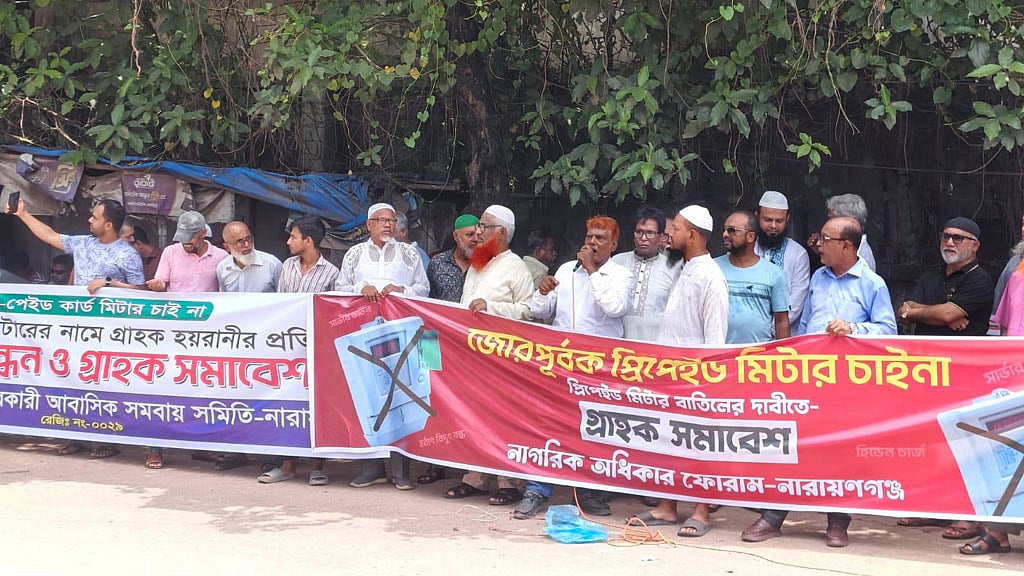
In Narayanganj, customers gathered outside a DPDC office in Killarpul on Jul 21 to protest against unusually high June bills.
The Nagorik Odhikar Forum, which organised the demonstration, alleged that several days of May consumption had been added to June. This pushed some households into higher tariff bands.
The forum’s Convenor, lawyer Mahbubur Rahman Ismail, said it had compared customers’ previous and current bills and found increases of between 100 and 150 percent in some cases.
“We have received more than 1,000 complaints so far and sent them to DPDC,” he said.
His own monthly bill usually ranged from Tk 1,000 to Tk 1,400. The latest was about Tk 4,500.
He said some bills had been reduced after customers complained, but they were not told how the revised amounts had been calculated.
The DPDC’s acting chief engineer for southern Narayanganj Md Kamal Hossain said officials had identified bills that appeared unusually high and checked them before they were issued.
He said relatively few complaints had reached his office.
Kamal’s own household bill rose from about Tk 3,200 in May to Tk 7,200 in June.
“My family also questioned it at first,” he said. “I checked the meter myself and found it was working properly. June was hotter, and electricity use at home had also increased.”
He said bills were corrected when meter-reading or calculation errors were found, but could not be reduced when the increase reflected actual consumption.
More than 100 customers went to the Rural Electrification Board’s regional office in Raipur, Lakshmipur, on Jul 26, demanding that their bills be checked and corrected.
The office’s Deputy General Manager Md Mosharraf Hossain said only 20 to 25 formal complaints had been submitted.
Staff were sent to each complainant’s home to compare the meter with the bill, he said. Most readings matched, while one meter was replaced and placed under observation after a fault was suspected.
Bills Double and Triple on Facebook
Customers have also taken to Facebook to share sharply higher bills.
Mohammadpur resident MH Kabir wrote that his bill had risen from Tk 3,119 in May to Tk 10,774 in June.
Sajid Raihan said his household usually paid between Tk 5,000 and Tk 6,000, but the latest bill was Tk 10,000.
Gazi Miraj said his bill, normally between Tk 3,000 and Tk 3,500, had climbed to Tk 7,779.
Another customer, Dewan Rumi, said his usual bill of about Tk 6,500 had almost doubled to Tk 12,500.
Why Did the Bills Rise?
There may be more than one explanation.
An employee involved in meter reading and billing at a distribution company said readings in his area had been taken several days early in May because of the Eid holiday.
Readings are normally taken towards the end of the month, but in that area they were recorded on May 25 and 26. The next readings were taken at the usual time, meaning the June billing period included about five additional days of consumption.
A new tariff also took effect in June.
Retail electricity prices rose by an average of 16.68 percent, although rates for the first two residential bands remained unchanged.
The price stayed at Tk 4.63 per unit for consumption of up to 50 units and Tk 5.26 for up to 75 units. Rates increased in the higher bands.
Calculations by bdnews24.com show that the energy charge for 200 units rose from Tk 1,294.50 to Tk 1,457, an increase of about 12.6 percent.
For 400 units, the charge increased from Tk 2,855.50 to Tk 3,329, or about 16.6 percent.
At 600 units, it rose from Tk 5,389.50 to Tk 6,331, an increase of about 17.5 percent.
These calculations do not include VAT, meter rent, demand charges or outstanding payments.
A Hotter June
June was also hotter than May.
The Bangladesh Meteorological Department said May’s average temperature was 0.4C below normal, while June’s was 0.5C above normal.
The country’s average maximum temperature rose from 38C in May to 38.6C in June.
The PDB chairman said power demand increased during the June heatwave.
“Previously, the system load was around 15,500MW. This time it rose to as much as 17,500MW,” Rezaul said. “Customers used that electricity, so bills will also rise.”
He added that several complaints from DESCO customers shared on social media had been checked at their homes. Officials examined the meters, appliances, and electricity use and found that the bills matched actual consumption.
Similar investigations into several complaints from the Sylhet region found no evidence of overbilling, he said.
What the Rule Say
PDB’s billing procedures require electricity offices to prepare a “billing exception” report before bills are finalised.
Bills that appear abnormal or unusual should be sent to the relevant sales and distribution office for examination and correction.
Officials are also required to check at least 10 percent of bills after they are printed and delivered to the local office.
When a meter cannot be read, an estimated bill may be prepared using the customer’s average consumption over the previous six months. But estimated bills cannot be issued for more than two consecutive months.
Under the Electricity Rules 2020, customers disputing a bill may submit a written complaint after depositing 10 percent of the amount demanded.
The responsible local official must resolve the complaint within 15 working days. A corrected bill must be treated as a new bill, with no late fee or surcharge.
No Complete Picture
After complaints began spreading, the Power Division instructed distribution companies on Jun 29 to monitor the issue and take necessary action.
A review meeting chaired by Power Secretary Mirana Mahrukh was held on Jul 2 with district administrators and distribution company officials. They were told to correct clerical and technical mistakes quickly and take action if wrongdoing was found.
Still, there has been no central investigation.
The six distribution companies’ complaint systems are connected to the Power Division’s integrated customer service number, 16999, and complaint details can be stored and monitored centrally.
But no combined figures have been published showing how many billing complaints were received in June and July, how many bills were corrected or how much money was deducted after revision.
“A bill may occasionally be a little higher or lower,” the PDB chairman said. “But we have received no evidence of excessive billing on a mass scale.”